

THE BUTTON THAT SPOKE VOLUMES: HOW IGP DISU TURNED A SIMPLE UNIFORM CORRECTION INTO A LESSON IN LEADERSHIP
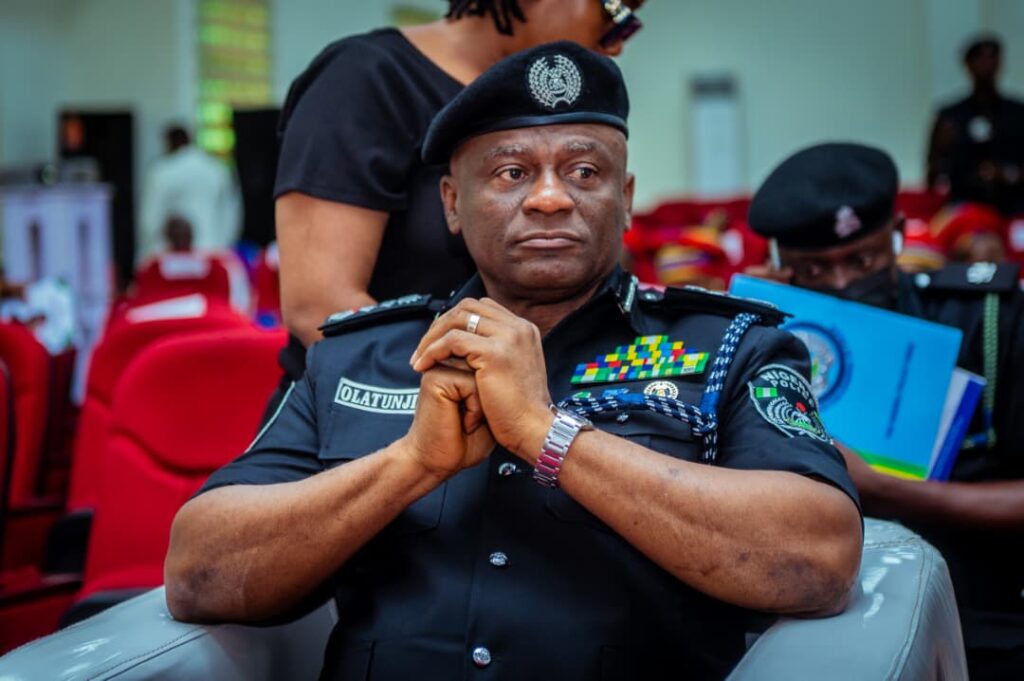
A good leader does not weaken discipline by showing compassion. He strengthens discipline by correcting people without breaking their dignity.*By* _ACP Oluseyi Olabisi Okuwobi_There are moments in leadership that require no speech.No podium.No press conference.No elaborate policy document.No command performance.Sometimes, leadership is revealed in something as ordinary as a button on a police uniform.A short video currently making the rounds on social media captures one of such moments. The incident may appear simple: the Inspector-General of Police, IGP Olatunji Rilwan Disu, observed a police officer whose uniform was not properly fastened. What followed, however, was far more significant than the uniform infraction itself.Rather than humiliate the officer, order that he be detained, or turn the moment into an exhibition of authority, the IGP personally intervened and helped him correct his uniform.He corrected the officer without crushing him.And therein lies a profound lesson in leadership.A good leader does not weaken discipline by showing compassion. He strengthens discipline by correcting people without breaking their dignity.THE BUTTON WAS SMALL. THE LESSON WAS HUGE.In a hierarchical organisation such as the Nigeria Police Force, the authority of a superior officer over a subordinate is unquestionable.A senior officer could easily have interpreted the improperly fastened uniform as an act of indiscipline deserving immediate punishment.Indeed, as the social-media caption accompanying the video observed, many senior officers might have demanded that the officer be detained and punished.But the IGP chose a different path.He chose correction over humiliation.He chose guidance over intimidation.He chose humanity without abandoning discipline.That distinction matters.Because discipline is not synonymous with punishment.And authority is not synonymous with cruelty.DISCIPLINE WITHOUT DEHUMANISATIONA police officer’s appearance matters.The uniform is more than clothing. It represents the institution. It communicates order, discipline, readiness and respect for the profession.An improperly fastened uniform therefore deserves correction.But the manner in which that correction is administered also says something about the institution.A subordinate officer can be made to understand the importance of professional appearance without being shouted down, ridiculed, publicly embarrassed or treated as though he has lost his humanity.That is precisely what makes the moment involving IGP Disu so instructive.He did not excuse the lapse. He corrected it.But he corrected it in a way that preserved the dignity of the person wearing the uniform.That is leadership.WHEN AUTHORITY BECOMES SERVICEThere is a profound difference between a leader who says, “Do this because I am your superior,” and one who demonstrates, “This is how it should be done; let me show you.”The latter builds people.The former may simply enforce compliance.The IGP’s gesture communicated something much deeper than a command.It demonstrated how an officer should look after his uniform.It showed the junior officer exactly what was expected.And perhaps most importantly, it demonstrated that being corrected by a superior officer does not have to become an experience of shame.That is particularly important in modern policing.The Nigeria Police Force needs discipline. It needs accountability. It needs professionalism. It needs officers who understand that standards matter.But it equally needs leaders who understand that the police officer behind the uniform is a human being.THE LEADERSHIP OF DIGNITYLeadership is often measured by how a person treats those who have power over him.But perhaps an even better measure is how he treats those over whom he has power.Anyone can be courteous to a superior.The real test of character is whether one can exercise authority over a subordinate without abusing that authority.The IGP had every institutional authority to demand an explanation.Instead, he demonstrated something more powerful:authority tempered by empathy.There is nothing weak about that.On the contrary, it takes considerable confidence for a leader to exercise authority without feeling the need to constantly demonstrate that he possesses it.A leader who is secure in his authority does not need to humiliate people to prove that he is in charge.“NO BE EVERYTHING BE PUNISHMENT”The Nigerian expression accompanying the video — “No be everything be punishment” — captures the lesson perfectly.Not every mistake requires punishment.Some mistakes require correction.Some require counselling.Some require mentorship.Some require a warning.And, certainly, some require disciplinary action.Wisdom is knowing the difference.A professional organisation should have the capacity to distinguish between an error that requires immediate punitive action and an error that can become an opportunity for learning.If every mistake is punished harshly, officers may eventually learn to fear their leaders rather than respect them.But when officers are corrected firmly and fairly, they can learn to respect both the leader and the institution.THE IGP WHO CHOSE TO SHOW, NOT JUST TELLThere is another important dimension to this incident.The IGP did not merely tell the officer to button his uniform.He showed him.That is the essence of leadership by example.The message was not simply:“Your uniform is improperly worn.”It was:“This is the standard. Let me help you get it right.”That seemingly little gesture can have a profound effect on the recipient.An officer who is publicly humiliated may remember the humiliation.An officer who is corrected with dignity may remember the lesson.And institutions become stronger when their people remember lessons rather than resentments.A DIFFERENT KIND OF POLICE LEADERSHIPFor an organisation as large, complex and hierarchical as the Nigeria